

We write Reinvent Science to broaden the conversation around science and science funding, and we rely on you to help us reach as many readers as possible. Please support our work by subscribing and sharing.
Curiosity-driven science1 has become one of the most tightly-tracked careers in existence. It’s near-impossible to become a professor at a top research university without laser focus from early college or before. This phenomenon is tightly coupled to the tenure system’s extreme job security, status, and relatively few positions.
As a result, most scientists are hyper-specialized at being academic researchers. Specialization is important – especially when you are at the very frontier of human knowledge. But it’s also clear at a conceptual level that over-specialization is the equivalent of intellectual inbreeding. 21st century science needs to resolve this tension.
Everybody gives lip service to multi-disciplinary collaborations. But even there it is generally a “biology academic researcher” collaborating with a “chemical engineering academic researcher.” The reality is that while those two will understand a different set of tools and physical phenomena, the ways that the academic biologist’s brain works are probably more similar to the academic chemical engineer than to someone doing industrial biology research, let alone a professional engineer or machinist.
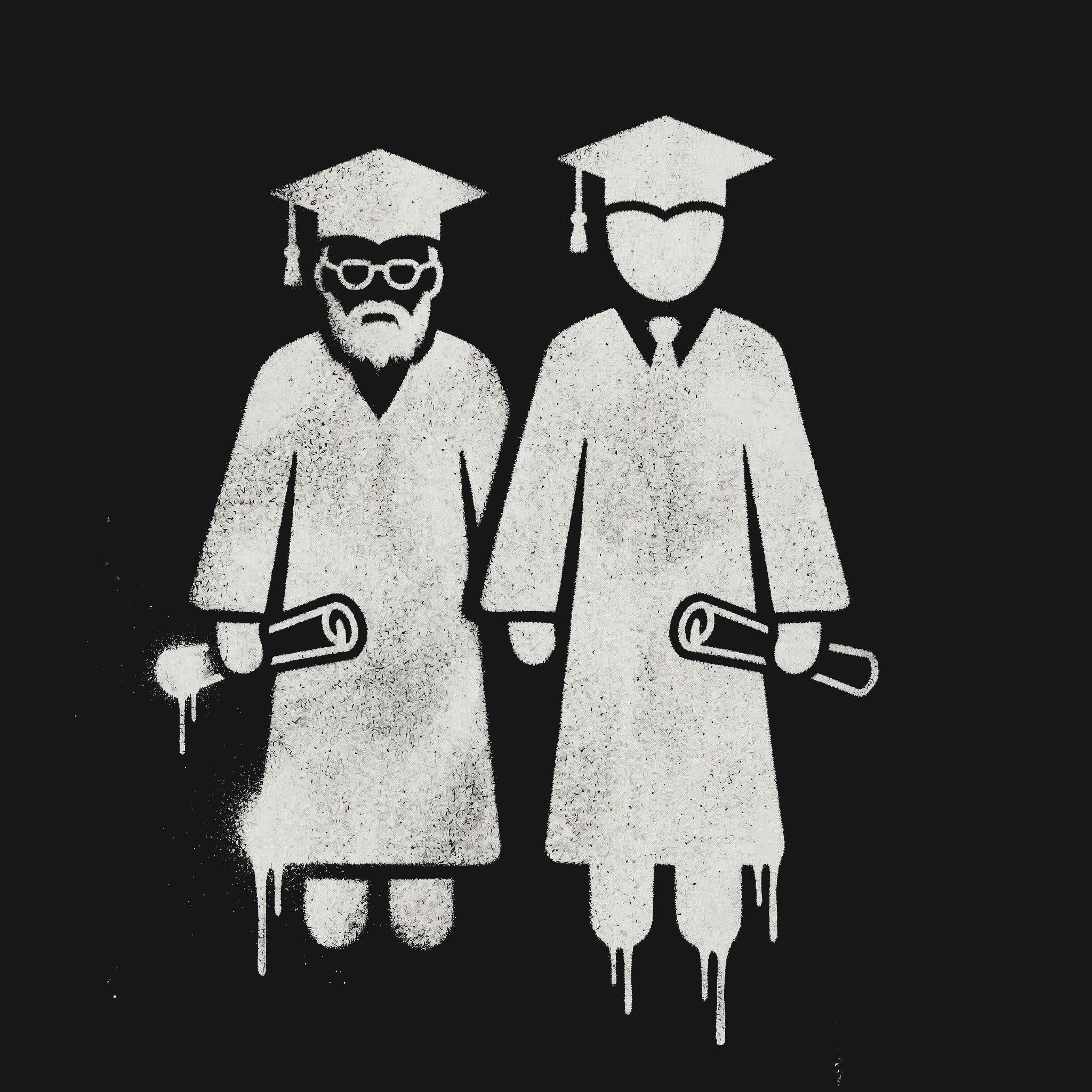
What if we normalized doing serious science as a second career? That is, what if it was a normal thing for someone to spend a couple of decades as a professional engineer, machinist, or other technical profession and then to shift to doing science.
Science as a second career probably wouldn’t lead to the return of the gentleman scientist: modern science does require more infrastructure and knowledge than is feasible for the vast majority of people.
But what if these second career scientists teamed up with only-career scientists? One could imagine labs run by cofounder teams of tracked scientists and second-career scientists. The analogy might be between a non-commissioned officer and a commissioned officer. A commissioned officer earns their position by devoting their career to becoming an officer. They’ve gone to a military academy, they hang out with other officers, and plan to spend most of their life being an officer. NCOs have earned their position by doing a lot of stuff. (It’s of course not a perfect analogy because they both are soldiers their whole careers.)
A big barrier to this happening is the depth of knowledge one needs to start contributing to serious science. (In addition to the rigid status structure which would need to change for this to work.) That barrier could fall if AI realizes the ability to help motivated learners get to the frontier of knowledge quickly. We are not fans of sprinkling magic AI dust on the future, but that possibility is both not totally implausible and might unlock a lot of potential discoveries.
Here we’re talking about Vannevar Bush-style science where researchers pursue by and large what they think is important and interesting as opposed to having work assigned to them.
Sounds like something https://substack.com/@casualphysicsenjoyer is working on with his Discord
This post reminds me of Laudel and Glaser's theory that an academic actually has three careers: their organizational positions, research pathway, and interaction with the scientific community.
https://link.springer.com/article/10.1007/s10734-007-9063-7
https://web.archive.org/web/20220301141148/https://www.laudel.info/wp-content/uploads/2015/12/35_2015discussion_paper_Nr_35_Glaeser_Laudel.pdf
People doing and publishing research outside of academia (I came across this in the context of independent researchers, but it would apply to many professionals in industry) likely have research and community careers, but still find it hard to interact with academic researchers, let alone get a university position.
That said, there is a small body of papers discussing strengthening connections between academics and practitioners, mostly in the social sciences.