

Old Sturbridge Village, a recreation of an 1830s village in rural Massachusetts, stands out because of its commitment to live demonstrations of period work. On a typical day the village is populated by dozens of professional interpreters (often trained historians) in period costume, performing farmwork and trades such as tinsmithing, blacksmithing, shoemaking and many others using historically-accurate methods and tools.
As a visitor, Interacting with one of these interpreters combines the fascination of watching a skilled practitioner work with the utility of a tutorial, the fun of a live performance, and the value of a history lesson. The overall effect is compelling. Dan’s 6-year-old daughter could have watched the blacksmith work and listened to his descriptions of his tasks and techniques for hours. The experience is categorically different from a “how it’s made” documentary or a youtube how-to1. An interpreter repairing an axe jokingly complained of the many “suggestions” he’d received from decades of visitors about the right way to form a handle. Later, while shaping the end of a fence rail with a different axe that he’d made,, that interpreter described his work as experimental archaeology in which he learned unwritten aspects of 1830s production methods through his experience of using period tools and materials.
As a result Dan now knows more about how to make an axe in 1830 than he does about how to make one in 2026. Moreover, being a blacksmith feels more real to his daughter than being a semiconductor engineer. What if there was an Old Sturbridge Village for cutting-edge industry?
In 1962, a group of business leaders and educators met with President Kennedy to discuss the possibility of a permanent industrial exposition whose benefits were to include:2
1. A dramatic demonstration of United States leadership in science, technology, research, and industrial and commercial capability “for all the world to see and believe.”
2. A display of the application of scientific and technological achievements to the basic industries of the United States and of the interrelationships among these industries in the basic working of the economic system.
3. A stimulus to patriotic pride in American inventiveness, resourcefulness, pioneering development, and technological superiority.
4. The close connection between the competitive industrial system in the United States and the nation’s social, educational, political, and financial structures.
5. A showcase on the various professional fields of science and technology which will inspire and provide incentives for both students and teachers to the end that the future’s requirement for trained manpower is met.
6. An opportunity for study groups and technical missions, both from throughout the United States and from foreign countries, to view a “laboratory demonstration” of the intricate inner workings of the American economic and social systems and the benefits derived from them.
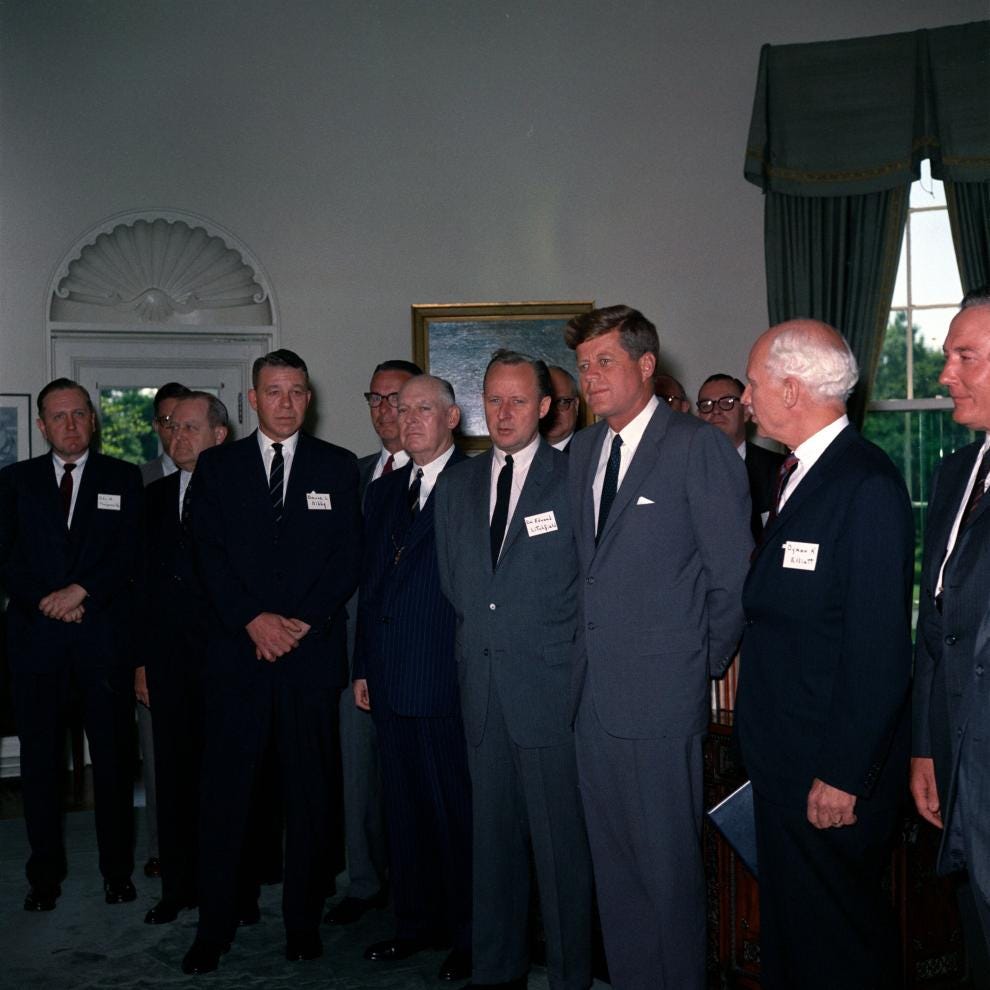
The plan, with an eye-watering proposed budget of 400 million 1962 dollars, never got off the ground despite a few bursts of activity during the 1960s. Nevertheless, it’s the closest we’ve come to a permanent living museum of modern industry and, at its peak, had attracted a number of corporate sponsors interested in demonstrating their production processes.
We find that list of benefits intriguing and meaningfully different from the North American World’s Fairs of the same decade and anything on offer today. Looking past the cold-war jingoism, the point of the exposition would have been to show visitors how American science and industry interacted with each other, how they shaped society, and how individual trades within science and technology worked in practice. Moreover it was all intended to be updated to reflect changing times. This sounds pretty useful!
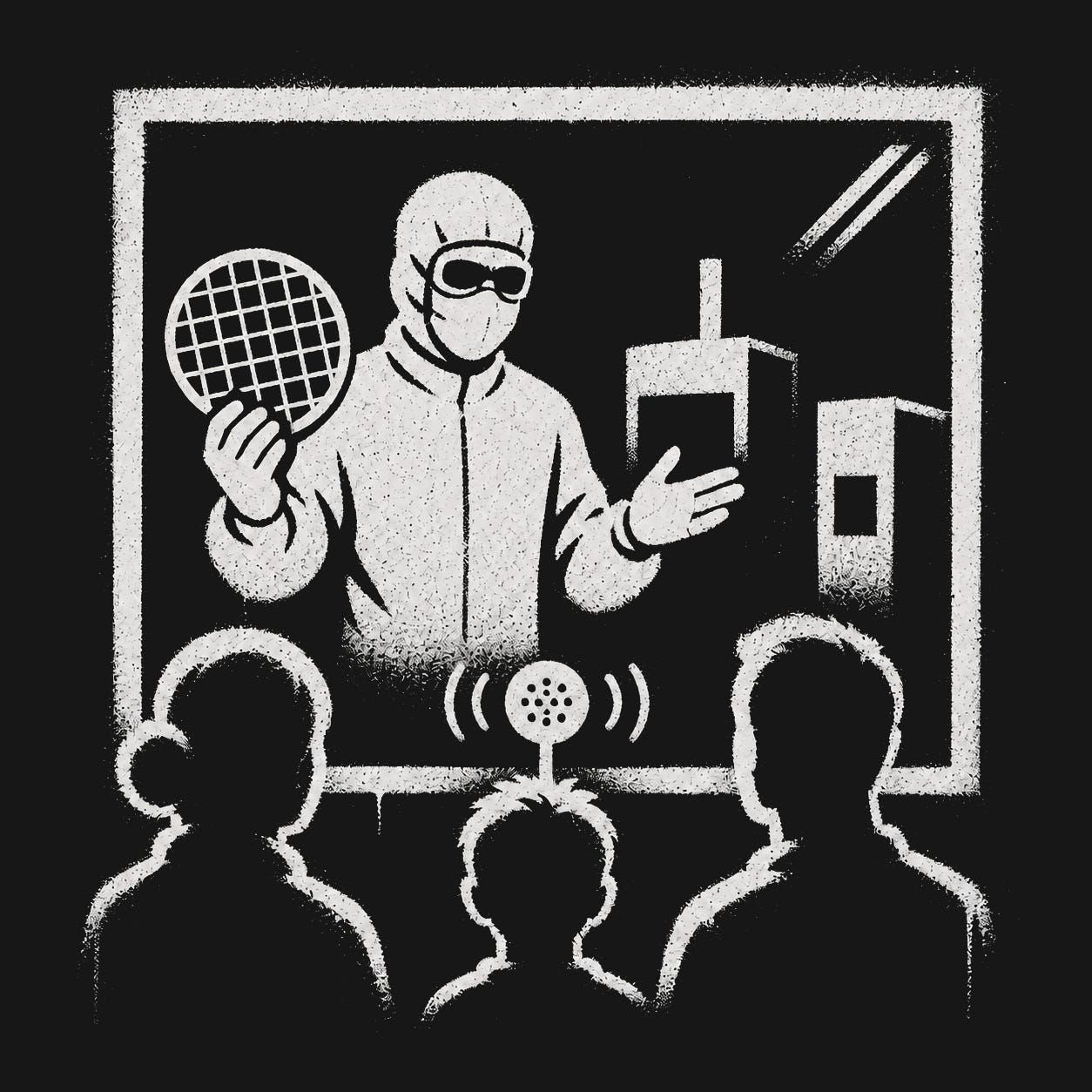
Imagine a small semiconductor fabrication line constructed with interpretation in mind. Many cleanrooms have glass walls or large windows so all it would take would be the addition of sound transmission equipment and careful arrangement of the tools and stations for visibility. Inside, a skilled technician is manufacturing a wafer of hundreds of experimental lasers. Although some steps happen invisibly inside vacuum chambers, others like lithography, dicing, and packaging remain skilled trades with much to observe and discuss.
Of course for this to work, the technicians operating the fab would need to be trained in talking to the public. They would narrate their process, describe their lives, and talk about what their work means to them and to their industry as a whole. This job, industrial interpreter, doesn’t exist today; it is lost in the interstitial space between industry, academia, and science museums.
Now imagine expanding this facility to include multiple industries. What if that fab were next to other production facilities? Perhaps an automotive assembly line, a set of programmable knitting machines and manual garment assembly stations (don’t show just the automated work!), and a machine shop. Now imagine each with their technicians and engineers trained to interpret the work in addition to doing it. How much more real and understandable would these industries and careers be if we could see them in action and have them explained to us live?
One final thought: a cohort of professionals expert at technical interpretation might be just what we need to comprehend future technical works produced entirely by AI.
We write Reinvent Science to broaden the conversation around science and science funding, and we rely on you to help us reach as many readers as possible. Please subscribe and share to help us continue to reach you and your colleagues.
Fun fact: Ken Burns’ first documentary (his Hampshire College thesis!) was shot entirely at Old Sturbridge Village.
Papers of John F. Kennedy. Presidential Papers. President’s Office Files. Subjects. United States Exposition of Science and Industry https://www.jfklibrary.org/asset-viewer/archives/jfkpof-110-005#?image_identifier=JFKPOF-110-005-p0001
"Of course for this to work, the technicians operating the fab would need to be trained in talking to the public."
That, for me, is the crux of the article!
Reminds me how my software developer friend responded to my undergrad friend's query, "What exactly do you achieve from writing code?" The answer ran in many directions: building apps, designing systems, and writing logic. But missed the simplest answer: code streamlines, speeds up, and automates processes to save human time and effort when solving problems.
Engineers often describe how things work rather than why they matter to everyday people.
The "Industrial Interpreter" would solve this exact disconnect. By translating complex technical reality into plain human value, this role would build a crucial bridge between specialists and the public: turning two disconnected worlds into a unified, collaborative ecosystem.
Fascinating to learn about the US Industrial Exposition proposal! Two quick associations this newsletter sparked for me: First is the operational transparency literature, backs up your experience and intuition about the benefits of pulling back the curtain. Second is the amazing glassmaking demonstrations at the Corning Museum of Glass!