

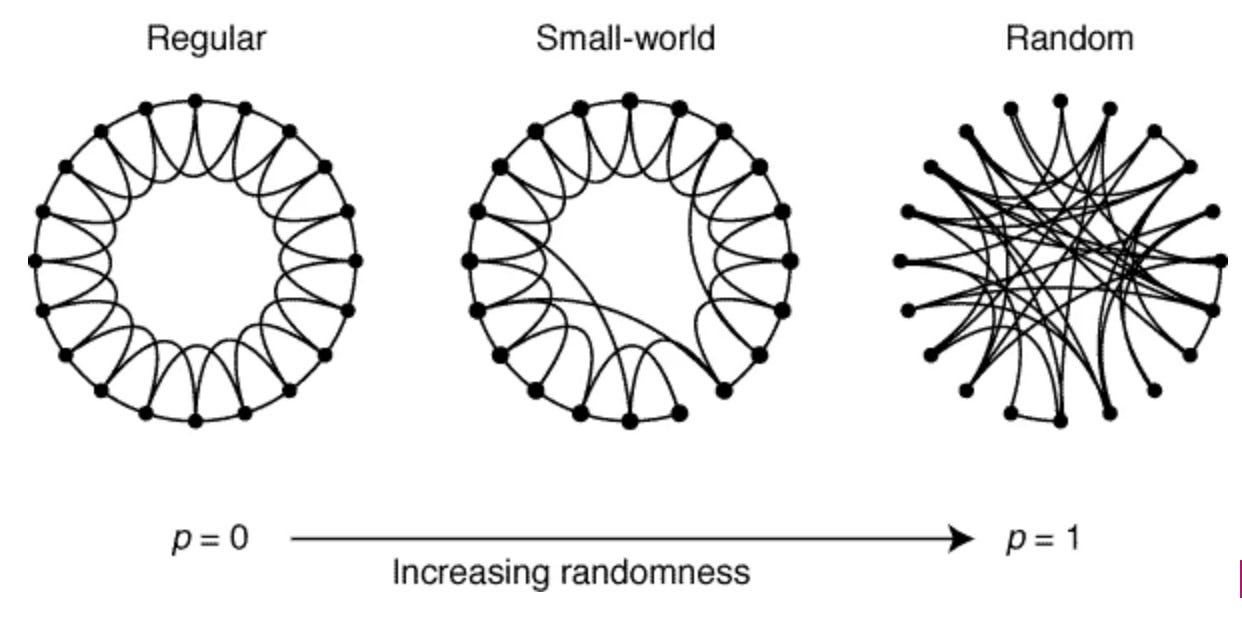
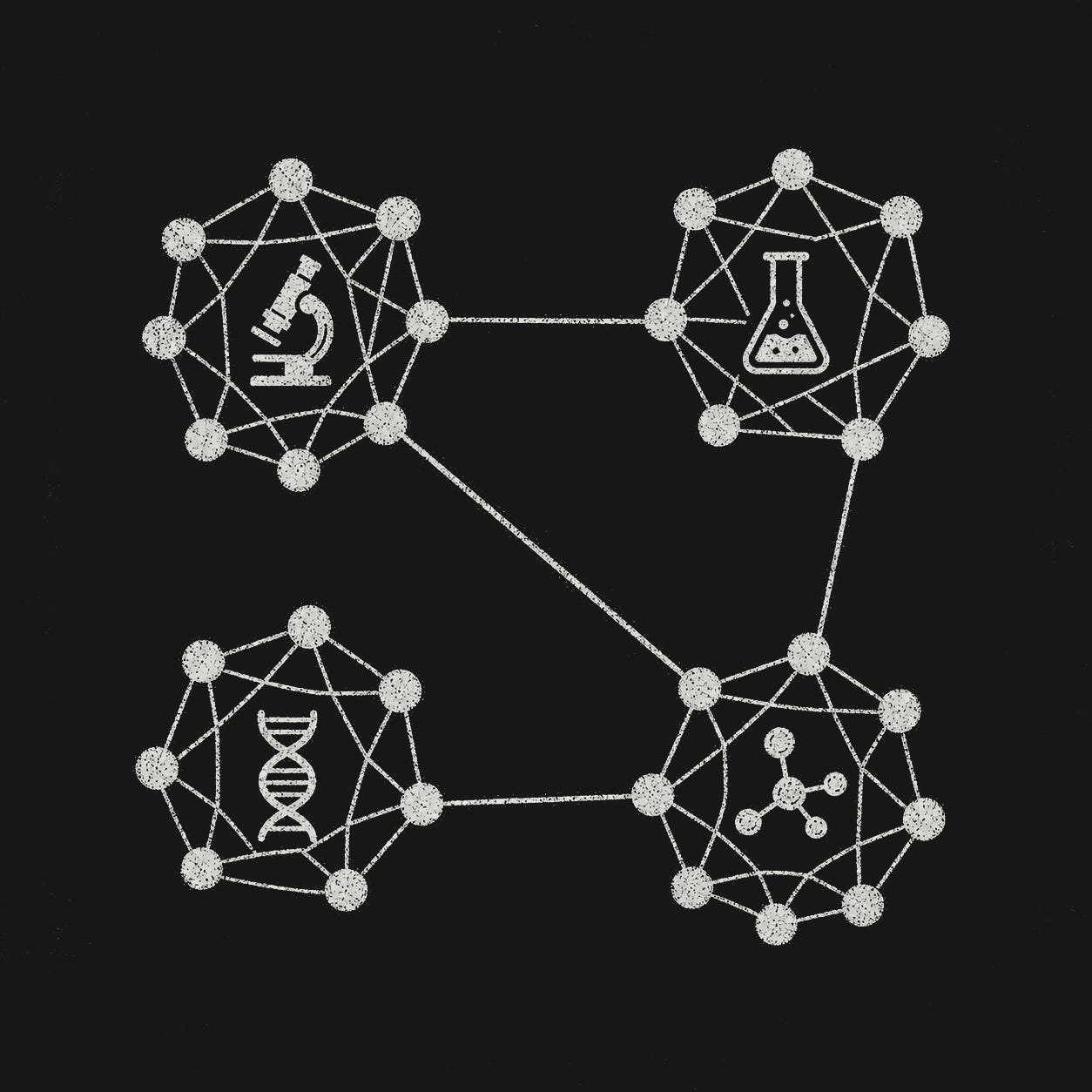
Small-world networks1 are ones in which most nodes are connected to several neighbors (these groups are known as “cliques”) while a few nodes have long-distance connections. Perhaps surprisingly, small world networks are better at generating new ideas than “fully connected” networks in which almost every node is connected to every other node. In science today it’s easy and expected for everybody in a field to know almost everybody else in their field and adjacent fields. Frequent international conferences, digital journals, email, etc. Your prospects for tenure and funding decrease drastically if you’re relatively obscure. From a network perspective this isn’t great for generating new ideas. Perhaps we need more mechanisms for disconnected science cliques to form and refine wild new ideas before they’re exposed to critique from the entire internet.
These mechanisms could take many forms! Some might be mundane: a department like GMU Economics in the 90s could choose to hire a whole cluster of non-traditional thinkers. Some might be more exotic: the world needs more scientific secret societies!
We write Reinvent Science to broaden the conversation around science and science funding, and we rely on you to help us reach as many readers as possible. Please support our work by subscribing and sharing.
Watts, D., Strogatz, S. Collective dynamics of ‘small-world’ networks. Nature 393, 440–442 (1998). https://doi.org/10.1038/30918 (Also the source of the image used here)